
You’re meticulous about SPF on your face. You reapply, you wear the hat, you know your UVA from your UVB. So here’s the uncomfortable question for anyone who takes sun care seriously: when was the last time you protected your hair and scalp? Because while you were guarding your skin, the sun was quietly working on the part in your hair, the thinning crown, and the proteins that hold each strand together. Most people never connect summer sun to the dull, brittle, fading hair they notice by August — but dermatologists do, and the fix runs both topical and internal. We’ll cover both, including the antioxidant angle most sun-care routines completely ignore.
Does the sun really damage your hair?
Short answer: yes, and in more ways than one. UV radiation breaks down keratin, the structural protein that gives hair its strength. Strip that down and you get the classic summer triad: dryness, brittleness, and breakage. UV also degrades melanin, the pigment that colors your hair — which is why hair lightens in the sun and why color-treated hair fades faster. That lightening isn’t a free highlight job; it’s a visible sign the protective pigment is being destroyed, leaving the proteins underneath even more exposed.
Here’s the part that matters most for long-term hair health: UV generates free radicals in the scalp, creating oxidative stress. Your body normally neutralizes free radicals with antioxidants, but heavy sun exposure tips that balance. The result is low-grade scalp stress that can interfere with normal follicle function over time.
What does sun-damaged hair actually look like?
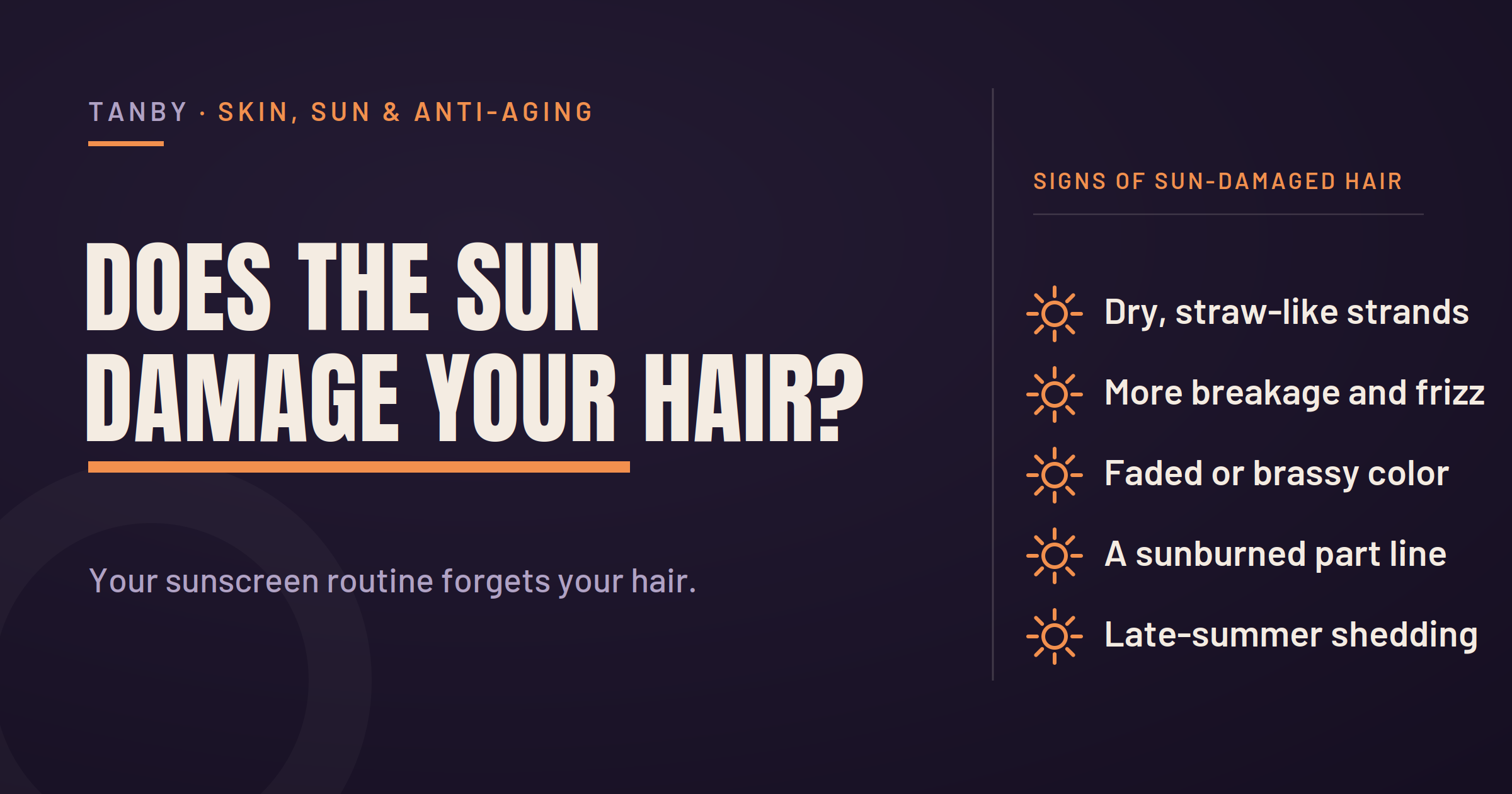
You usually feel it before you analyze it. Watch for:
- Hair that feels straw-like, rough, or unusually dry by late summer
- More breakage, split ends, and frizz than normal
- Color (natural or dyed) looking faded or brassy
- A tender, flaky, or sunburned scalp — especially along the part line
- More shedding than usual in late summer and early fall
That last one is real. There’s a recognized seasonal uptick in shedding in the months after peak sun, partly linked to UV stress on the follicle.
Why your scalp is more vulnerable than you think
Let’s be honest about geography: your scalp is closer to the sun than almost anything else on your body, and your part line and any thinning areas have zero natural cover. UVB burns the exposed skin; UVA, which stays strong year-round and even penetrates light cloud, drives the deeper oxidative damage. So this isn’t just a beach-day problem. It’s a Tuesday-afternoon-walk problem.
How do you protect your hair and scalp from the sun?
Topical protection comes first — it’s the front line. The American Academy of Dermatology recommends a few straightforward moves:
- Cover up. A wide-brimmed hat is the single best thing you can do.
- Protect the scalp directly. For thinning hair or an exposed part, use a broad-spectrum, water-resistant SPF 30+ — spray or powder formats are easiest on the scalp.
- Seek shade during peak hours, roughly 10 a.m. to 4 p.m.
- Rinse and condition after sun, chlorine, or salt water to restore moisture.
Can what you take internally help protect your hair from the sun?
Here’s the layer the typical routine skips. Since a big chunk of UV damage works through oxidative stress, your internal antioxidant status is part of the equation. A diet rich in antioxidants — and, for some people, a well-built supplement — helps support your body’s defenses against the free-radical load that sun and aging pile on.
This is the angle worth knowing if you’re a man also dealing with thinning or premature graying, because the same antioxidant and pigment pathways are involved. A men’s formula like FOLIKL+ is built around exactly these systems — antioxidant defense for the follicle (think Actrisave, Amla, catalase, zinc, and copper) plus support for the melanin pathways tied to pigment. It’s not sunscreen in a capsule, and nothing replaces a hat. But as the internal half of a sun-smart hair strategy, supporting your antioxidant defenses from within is the piece most people leave out.
Does the sun cause hair loss?
Not directly, for most people — UV isn’t a primary cause of male-pattern thinning the way genetics and DHT are. But it’s a known aggravator: the oxidative stress and seasonal shedding it triggers can make existing thinning look and feel worse. If your hair is already vulnerable, giving the sun a free pass is doing you no favors.
Quick note: this is general information, not medical advice, and results vary. For a painful scalp burn, persistent flaking, or noticeable hair loss, see a board-certified dermatologist.