For adults and teens frustrated by stubborn acne, redness, or a dull complexion who’ve tried creams, cleansers, and fad diets without lasting results — you want clear skin but you’re confused about which lifestyle changes actually help — our dermatology team combines clinical skin care with digestive science to create practical, research-informed plans (diet tweaks, targeted prebiotics/probiotics, and simple lifestyle shifts) that support gut balance and boost skin radiance without the guesswork.
Can gut health affect skin radiance?
Yes — and fast. The gut and skin talk to each other through immune signals, metabolites, and the microbiome (the so-called gut-skin axis). Why? Because an imbalanced gut can amplify systemic inflammation, change nutrient absorption, and shift hormones — all of which show up on your skin as breakouts, dryness, rosacea flares, or dull tone.
I’ve noticed patients who improve digestion (less bloating, more regular stools) often report brighter skin within weeks. Not magic — but real physiologic links. So if you want healthier, more radiant skin, ignoring gut health is like painting over a leaky pipe.
How this works — simple explanation
Gut microbes produce metabolites (like short-chain fatty acids) that calm inflammation and support the skin barrier. If those microbes are out of balance, you get higher inflammatory signals (cytokines), which can worsen acne and eczema. Also, poor gut function can reduce absorption of vitamins A, C, D, zinc — nutrients your skin needs to glow.
What foods and diet changes improve skin radiance?
Short answer: eat for microbial variety and low inflammation. That means more fiber, colorful plants, fermented foods, and quality protein — not endless restriction.
Practical picks that help skin (and gut):
- Prebiotic-rich vegetables: onions, garlic, leeks, asparagus, chicory (these feed good bacteria).
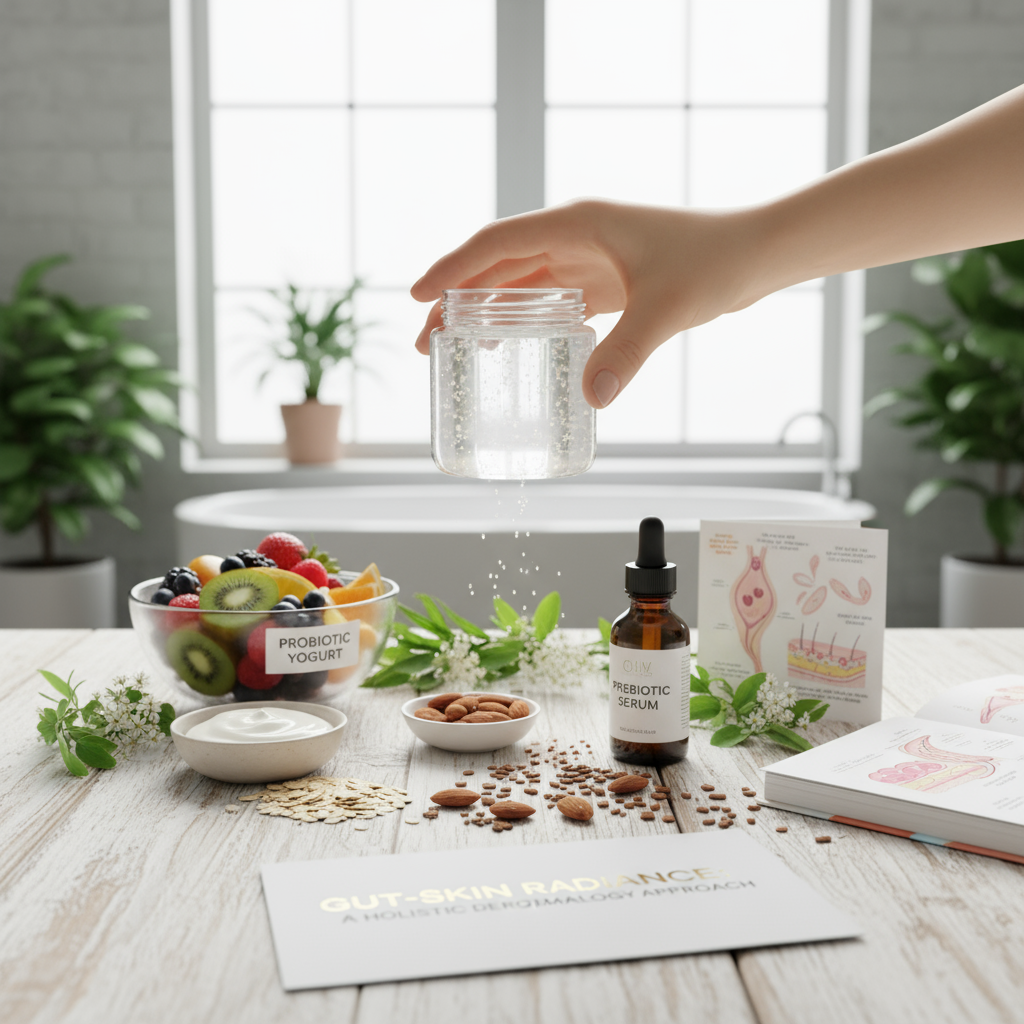
- Fermented foods / probiotics: plain yogurt, kefir, sauerkraut, kimchi, kombucha (choose low-sugar options).
- Omega-3 sources: salmon, sardines, walnuts — they lower inflammatory mediators that affect acne and redness.
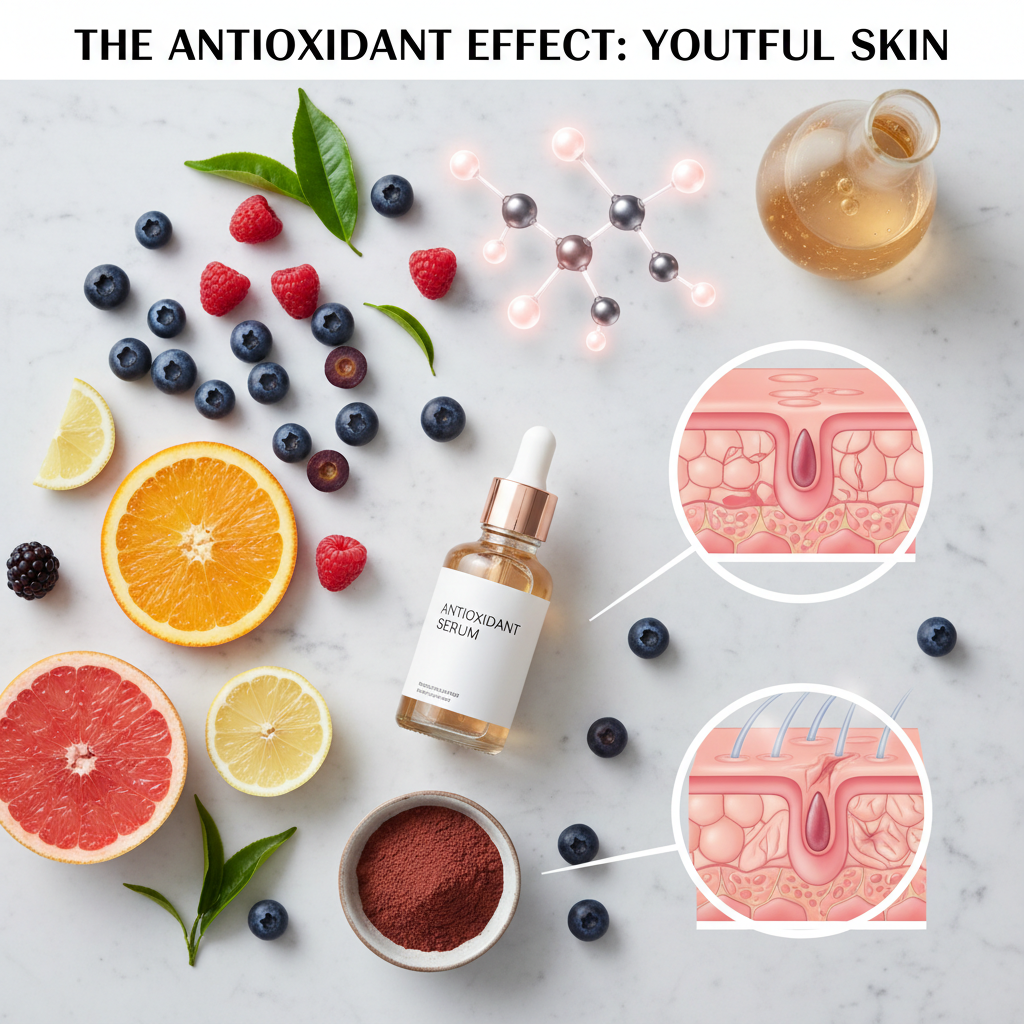
- Colorful fruits & vegetables: berries, leafy greens, sweet potato — antioxidants that protect skin from oxidative stress.
- Low processed-sugar intake: less candy/soda — high glycemic load can spike insulin and worsen breakouts.
Look, you don’t need to become vegan or count every carb. A simple rule: half your plate should be plants, include a fermented item once daily, and prioritize whole foods over packaged junk. This supports both gut health and lasting skin radiance.
Sample 1-day menu for glowing skin
Breakfast: plain Greek yogurt with 2 tablespoons of oats, blueberries, and a drizzle of honey (if you like).
Lunch: mixed greens with grilled salmon, roasted beets, avocado, and a lemon-olive oil dressing.
Snack: an apple and a small handful of walnuts.
Dinner: stir-fry with garlic, leeks, asparagus, tofu (or chicken), brown rice, and a side of sauerkraut.
Do prebiotics or probiotics help clear acne and other skin conditions?
They can. But it’s not one-size-fits-all. Probiotics (live bacteria) can reduce inflammation and sometimes improve acne, eczema, and rosacea. Prebiotics (fibers that feed good bacteria) help sustain those changes.
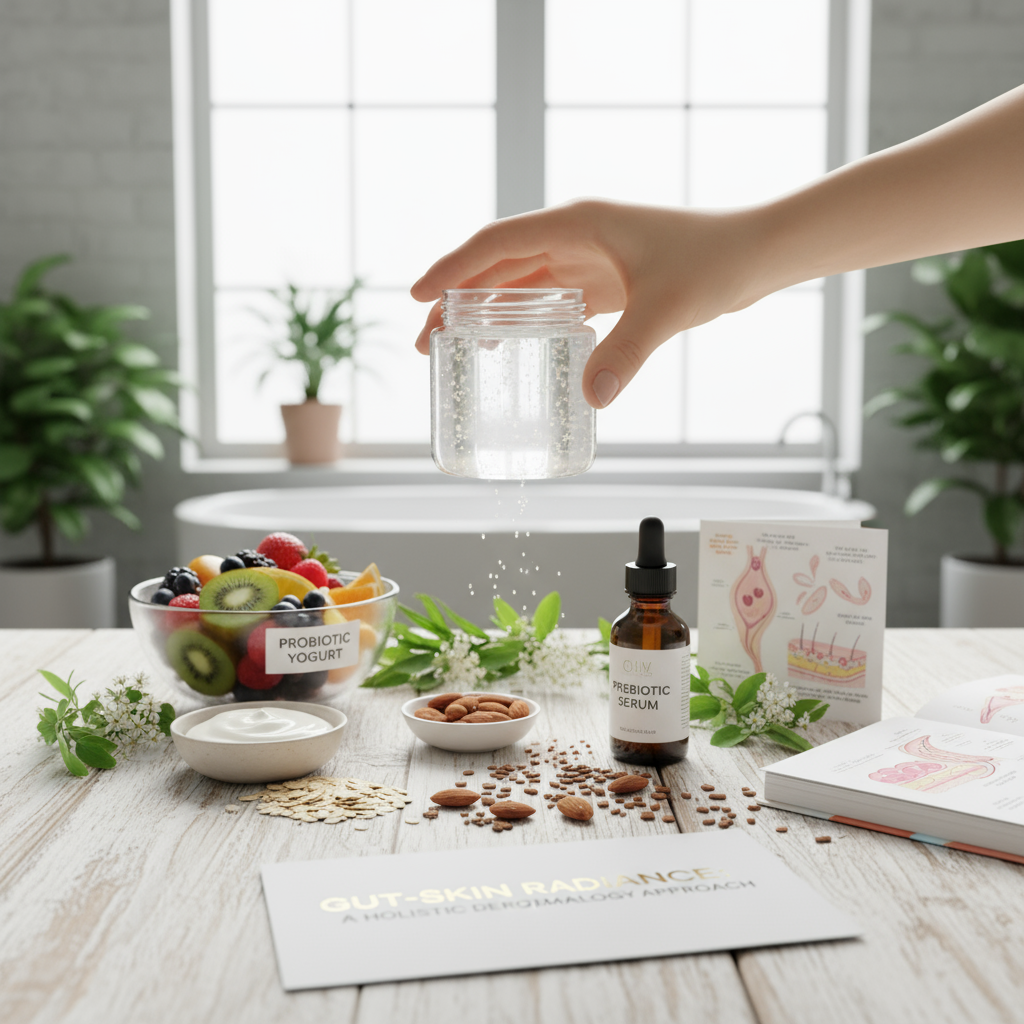
How to use them practically: choose supplements with clinically studied strains (for skin, strains like Lactobacillus rhamnosus and Bifidobacterium longum appear in research) and aim for a product that lists CFU counts and strain names. Start low (some people feel bloated at first) and give a trial of at least 6–12 weeks to notice skin changes.
If you’re taking prebiotic fiber powders (like inulin), 5–10 grams daily is a common starting point — but watch how your gut reacts. Too much too fast can cause gas. Slow increments win here.
How long after changing diet or taking probiotics will my skin improve?
Short answer: some patients see small improvements in 2 weeks, clearer changes by 6–12 weeks, and more stable results after 3 months. Why the spread? The microbiome and skin both need time to rebalance.
So be patient. If you aggressively remove foods and see immediate improvement, great — but don’t assume it’s permanent unless you address the root (gut diversity, inflammation, nutrient status). Consistency matters more than perfection.
Which skin conditions respond best to gut-focused care?
You’ll often see benefit in acne, eczema (atopic dermatitis), rosacea, and some cases of psoriasis — especially when standard topical treatments don’t fully solve the problem. That said, not every case is driven by the gut. Structural skin issues (deep scarring, genetic conditions) need dermatology-first approaches.
How do dermatology and holistic health work together?
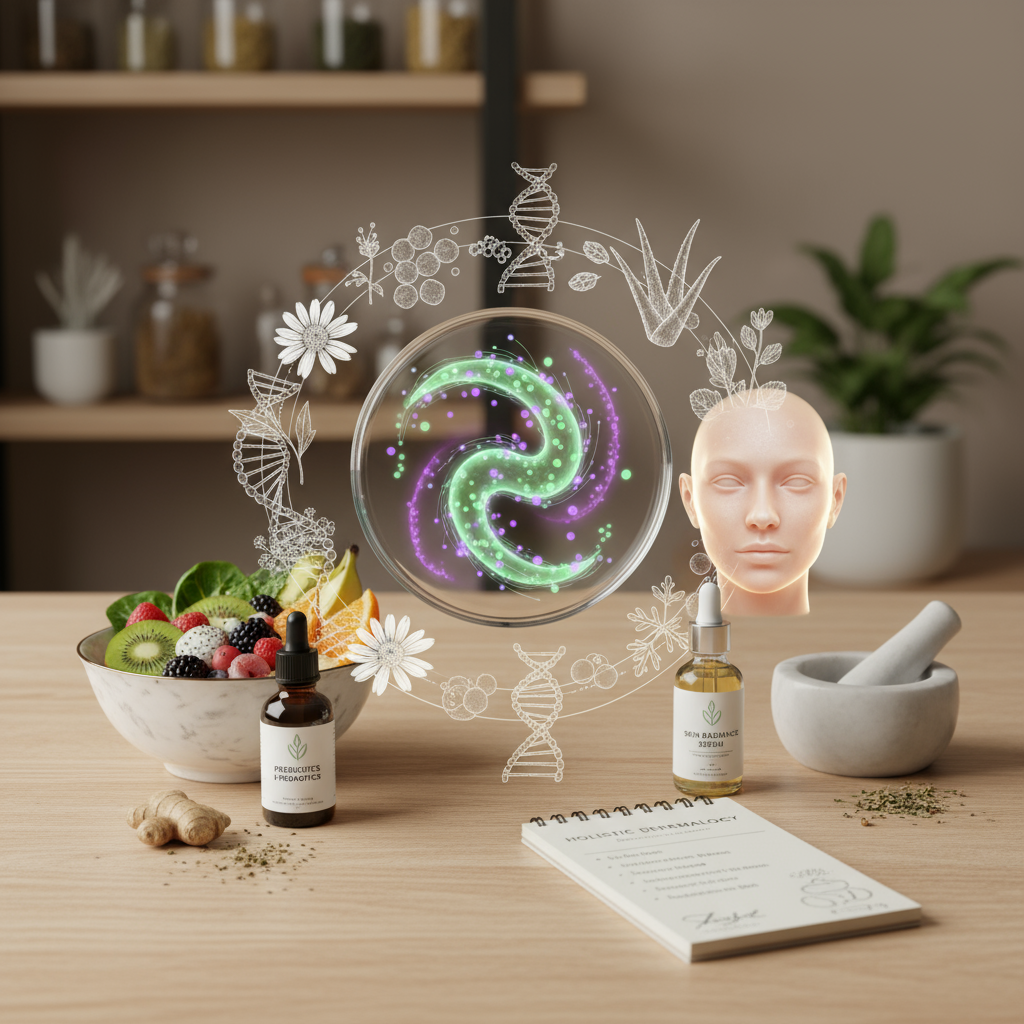
Real talk: topical creams and procedures can act fast, but without supporting the gut and lifestyle, results can relapse. So the best plan usually pairs targeted dermatologic treatments (retinoids, topical anti-inflammatories, lasers when needed) with gut-supportive steps: a healthy diet, pre/probiotics, stress management, and sleep optimization.
If this feels overwhelming, our team can handle the assessment for you — we run appropriate labs (stool testing, nutrient panels, food-sensitivity screening when indicated) and build a stepwise plan so you don’t guess and waste time and money.
When should I see a dermatologist or a specialist?
See a dermatologist if you’ve tried basic diet changes and OTC skincare for 3 months with little improvement, or if you have severe inflammation, scarring acne, or widespread eczema. Ask for an integrative consult if you suspect digestive symptoms (bloating, irregular stools, frequent antibiotics) are linked to your skin — that’s where combined testing and a coordinated plan help the most.
Practical next steps you can take this week
– Add one fermented food daily. Simple. One container of yogurt or a tablespoon of sauerkraut is enough to start.
– Swap one sugary snack for a fruit + nut option.
– Add a cup of cooked prebiotic vegetable twice this week (think: cooked leeks or asparagus).
– Track changes for 6–12 weeks — photos help. You’ll notice trends even when day-to-day noise makes it feel slow.
So here’s the deal: improving gut health won’t fix every skin problem overnight, but it’s a powerful lever that many people ignore. In my experience, combining dermatology with practical gut-support strategies gives the best, most durable results — skin that not only looks better but actually functions better. If you’d like help building a personalized plan (no fad diets, just evidence-based steps), our team can guide testing, choose targeted probiotics, and integrate dermatologic care so you don’t have to figure it out alone.